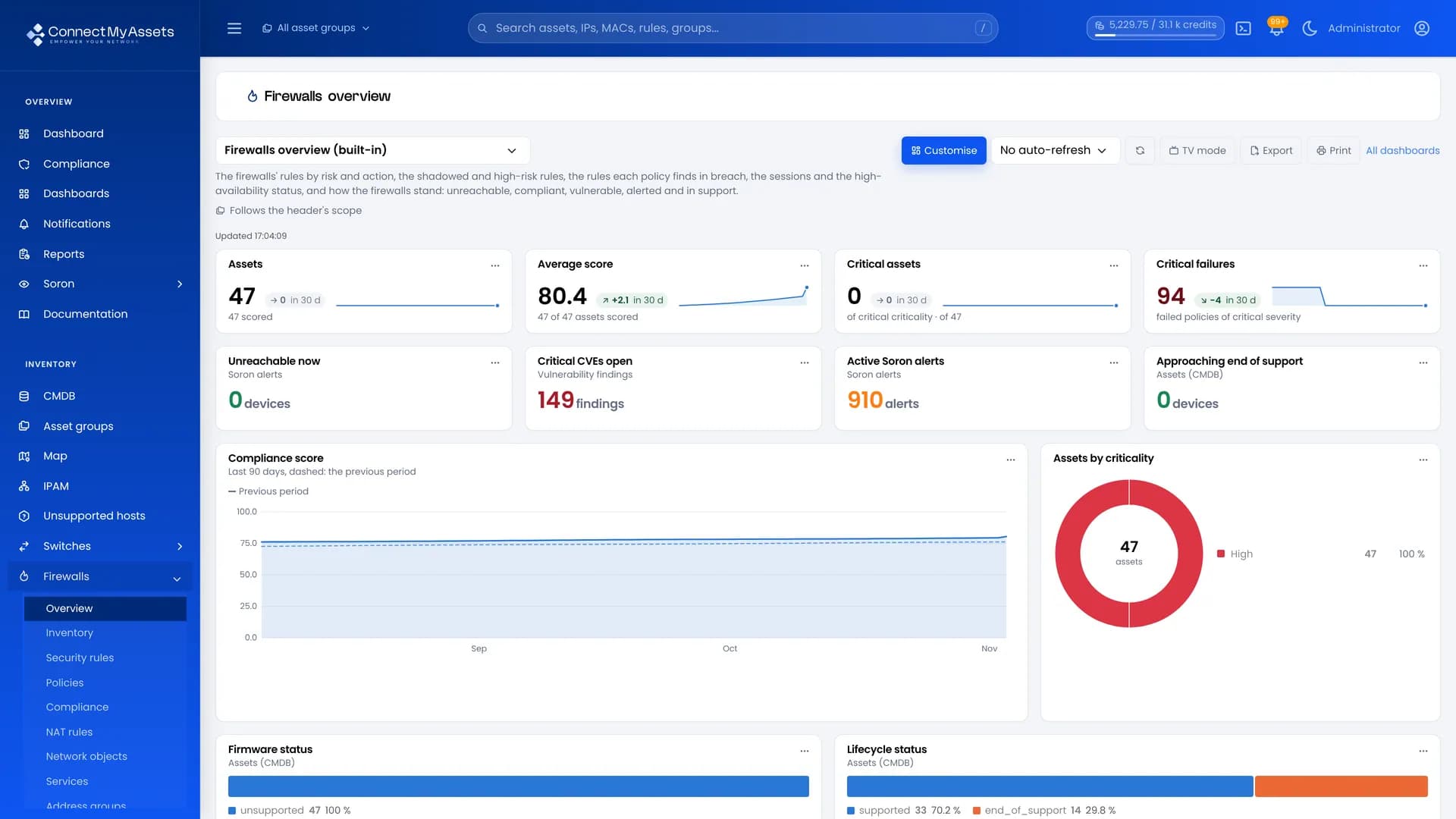
Shadowed rules, duplicates, overly permissive entries, dead rules, insecure services and missing logging: the six defects present in nearly every rule base, and why manual review does not find them.
The NIS 2 directive states its obligations as outcomes. Here is what they mean in practice for an estate of switches, routers and firewalls: inventory, vulnerabilities, privileged access, backups and reporting deadlines.
A network configuration describes an organisation's complete attack plan. Three questions tell you whether a management tool is genuinely sovereign: where data is processed, which law applies, and what remains if the service stops.
CERT-FR reported multiple vulnerabilities affecting Juniper Networks products on October 15, 2026. The potential impacts include remote arbitrary code execution, privilege escalation, and remote denial of service, making accurate inventory and remediation evidence essential.
A suspected advanced threat actor has exploited CVE-2025-61624 to deploy PEERSTITCH, a previously unreported memory-resident ARM64 malware. Organizations should identify exposed FortiOS, FortiPAM, FortiProxy, and FortiSwitchManager assets, validate firmware remediation, and investigate tagged VPN session activity.
The October 2026 netlab update revisits device configuration with Netmiko and asks whether replacing an Ansible-based method makes a meaningful difference. The reported conclusion is yes—but infrastructure teams should evaluate repeatability, performance, and operational evidence together.
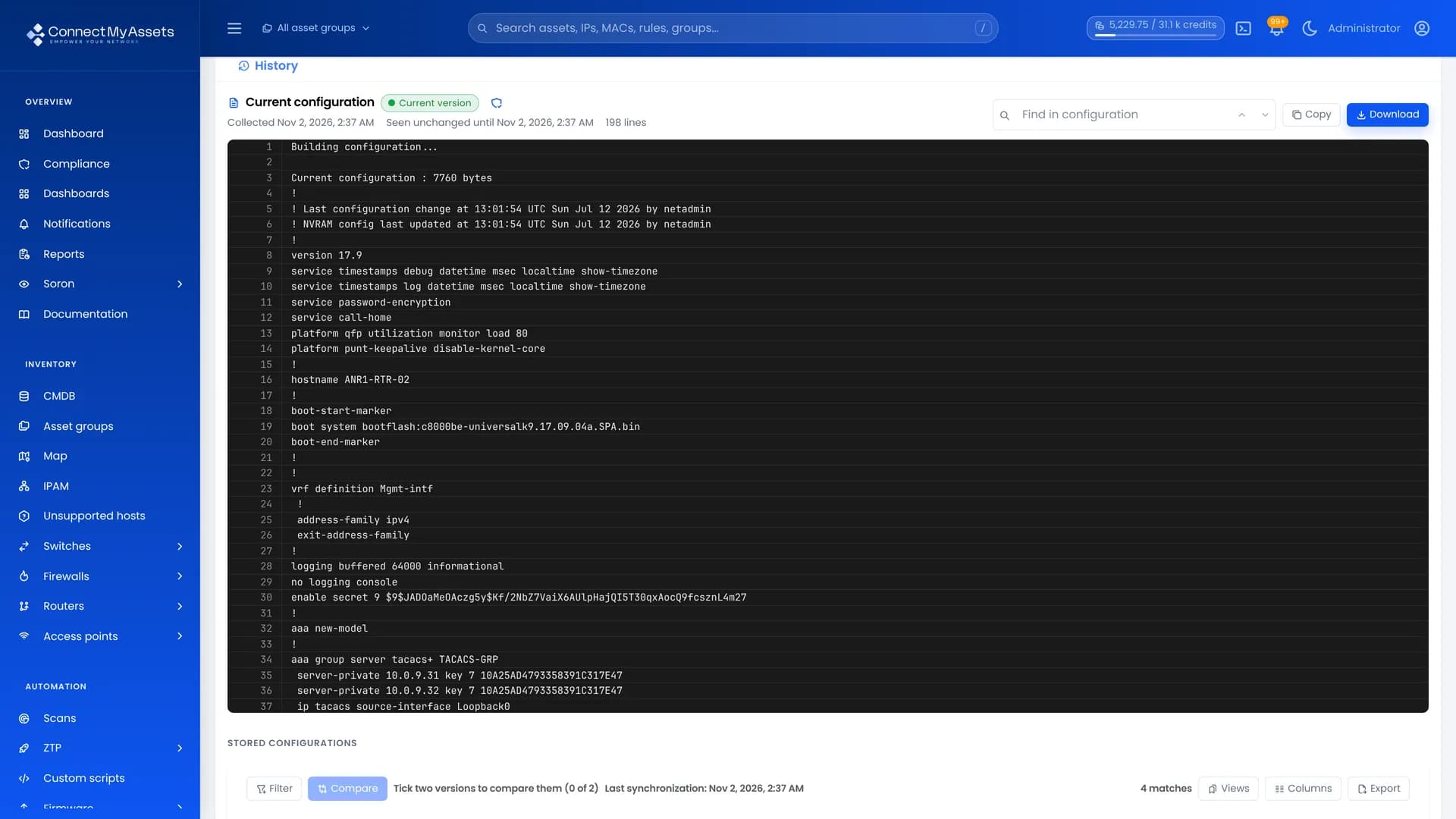
Cisco IOS can prefix both errors and warnings with a percent sign, making simple pattern matching unreliable. Network automation should therefore treat CLI output as a signal to investigate, validate the resulting state, and retain evidence of what actually happened.
CERT-FR reports a Cisco Catalyst SD-WAN vulnerability that can allow an attacker to bypass security policy. Cisco indicates that CVE-2026-76504 is being actively exploited, making accurate asset identification, version verification, and remediation evidence immediate priorities.
Cisco has patched CVE-2026-76460, an actively exploited authentication-bypass vulnerability in Cisco ISE and ISE-PIC. The flaw allows unauthenticated attackers to gain root privileges, making rapid asset identification, patching, and compromise checks essential.
CISA added three actively exploited vulnerabilities affecting Cisco, Citrix, and Fortinet products to its Known Exploited Vulnerabilities catalog. The additions give network teams a clear reason to identify affected Cisco and Fortinet devices, prioritize patching, and verify remediation against current asset and firmware records.
CERT-FR has reported multiple vulnerabilities affecting HPE Aruba Networking products. The potential impacts include remote arbitrary code execution, privilege escalation, and remote denial of service, making accurate device and firmware inventories essential for remediation.
Cisco says attackers are actively exploiting two recently patched Secure Firewall Management Center vulnerabilities in campaigns involving credential theft, Qilin ransomware, and state-sponsored activity. Accurate asset inventory, software tracking, and structured remediation workflows are critical to identifying exposed systems and reducing risk.
CERT-FR has reported multiple vulnerabilities affecting Cisco products, with potential impacts including remote arbitrary code execution, remote denial of service and SQL injection. Network teams should identify affected infrastructure, verify exposure and document remediation through controlled patching and compliance workflows.
CERT-FR has disclosed multiple vulnerabilities affecting Fortinet products, with potential impacts including remote arbitrary code execution, privilege escalation, and remote denial of service. Network teams should use the advisory to identify exposed appliances, prioritize updates, and retain evidence of remediation.
CERT-FR has reported multiple vulnerabilities in Palo Alto Networks products, including flaws that can enable remote arbitrary code execution, remote denial of service, and cross-site scripting. Network teams should translate the advisory into an asset-level response that identifies affected devices, prioritizes remediation, and preserves evidence of completed work.
Cisco has released software updates for seven internally discovered vulnerabilities affecting IOS XR, including two critical flaws rated 9.8. Every IOS XR release is affected regardless of configuration, and no workarounds are available. Network teams should identify exposed routers, prioritize updates, and retain evidence of each remediation step.
CERT-FR reports multiple vulnerabilities in HPE Aruba Networking ClearPass Policy Manager. The possible impacts include remote arbitrary code execution, privilege escalation, and remote denial of service, making accurate infrastructure inventory and structured remediation essential.
Cisco has released emergency fixes for an actively exploited Secure Email Gateway vulnerability that can give unauthenticated attackers root-level command execution. Because attackers may alter appliance logs after compromise, organizations must combine firmware remediation with external exposure checks and forensic investigation.
The cybersecurity incident known as “FortiBleed” involves a large-scale compromise campaign targeting Fortinet FortiGate firewalls and VPN gateways. Estimates suggest between 30,000 and 75,000+ devices may have been affected globally. The attack impacted organizations across government, telecom, healthcare, finance, and technology sectors in more than 190 countries.