Security · 1 MIN READ

FortiBleed Attack: Massive Compromise of Fortinet Firewalls

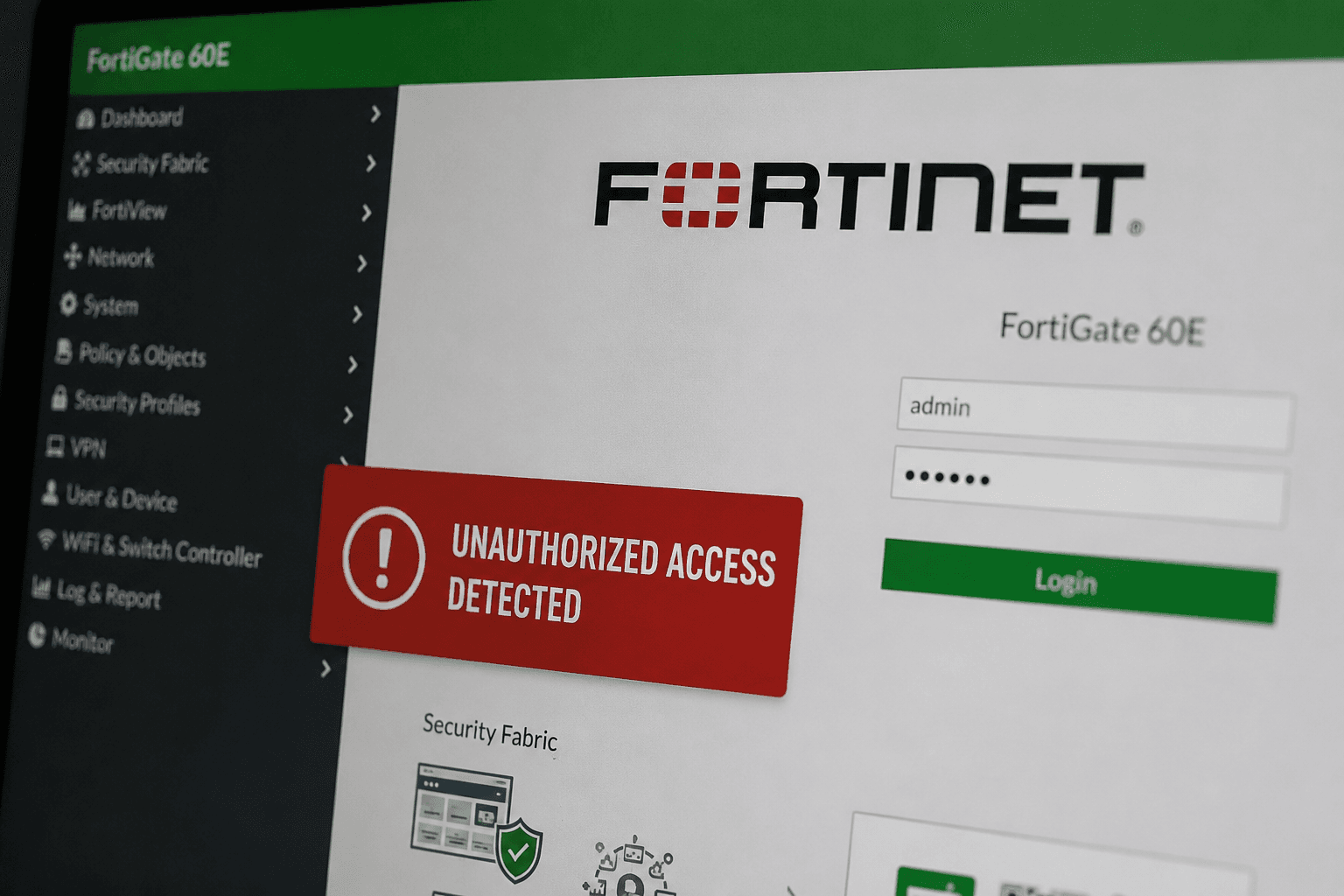
The cybersecurity incident known as “FortiBleed” involves a large-scale compromise campaign targeting Fortinet FortiGate firewalls and VPN gateways. Estimates suggest between 30,000 and 75,000+ devices may have been affected globally. The attack impacted organizations across government, telecom, healthcare, finance, and technology sectors in more than 190 countries.

FortiBleed Attack: Massive Compromise of Fortinet Firewalls

What Happened?

  • Credential stuffing using leaked passwords

  • Password spraying attacks at scale

  • Automated brute-force login attempts

  • Exposure of Fortinet admin/VPN interfaces on the internet

  • Use of previously leaked configuration data

Once access was gained, attackers extracted configuration files from devices.


Scale of the Attack

  • 30,000+ confirmed compromised devices (minimum estimate)

  • Up to 75,000–80,000 potentially affected firewalls

  • Impact across critical infrastructure sectors

  • Presence in 194 countries

  • Tens of thousands of valid credentials collected


Attack Chain

  • Internet scanning for exposed Fortinet portals

  • Credential stuffing and brute-force attacks

  • Login success on VPN/firewall interfaces

  • Extraction of configuration files

  • Reuse of credentials to expand access


Why It Matters

  • VPN access to internal networks

  • Lateral movement inside organizations

  • Exposure of Active Directory integrations

  • Data exfiltration

  • Persistent access through trusted systems


No Zero-Day Confirmed

  • No confirmed Fortinet zero-day

  • No breach of Fortinet itself

  • Main issue: exposed interfaces + weak credentials


Defense Measures

  • Reset all credentials

  • Enable MFA everywhere

  • Restrict admin interfaces from internet

  • Audit logs for suspicious logins

  • Review configurations and backups

  • Assume compromise if exposed publicly


ConnectMyAssets & Prevention

:contentReference[oaicite:0]{index=0} helps reduce this kind of risk by improving visibility over exposed assets.

  • Continuous discovery of internet-facing assets

  • Detection of forgotten or exposed services

  • Identification of shadow IT

  • Centralized asset inventory

  • Faster detection of exposure changes


Key Takeaway

This incident shows that:

  • Misconfiguration is more impactful than exploitation

  • Visibility gaps create major security risks

  • Credential hygiene remains critical

Share this articleLinkedIn ↗Email ↗

Keep exploring.

All articles
Security

Critical Check Point Management Flaw Allows Root Code Execution

A critical vulnerability in Check Point Security Management and Log Servers could let an unauthenticated network attacker execute code as root. Because the management server controls firewall policy and administrator access, organizations should apply the LivePatch fix and verify every potentially exposed system.

Read article
Security

Check Point Management-Server RCE: What to Track

CERT-FR has reported a vulnerability in Check Point products that can allow remote arbitrary code execution. Administrators should identify affected management assets, apply the required vendor updates, and search SmartConsole logs for the login-failure pattern highlighted in the advisory.

Read article
Security

Cisco ISE Zero-Day Under Active Attack

Cisco has disclosed a maximum-severity authentication-bypass vulnerability in ISE that is already being exploited. Network teams should identify affected systems, follow Cisco’s remediation guidance, and document patch or mitigation status across their network-access infrastructure.

Read article