Back to Blog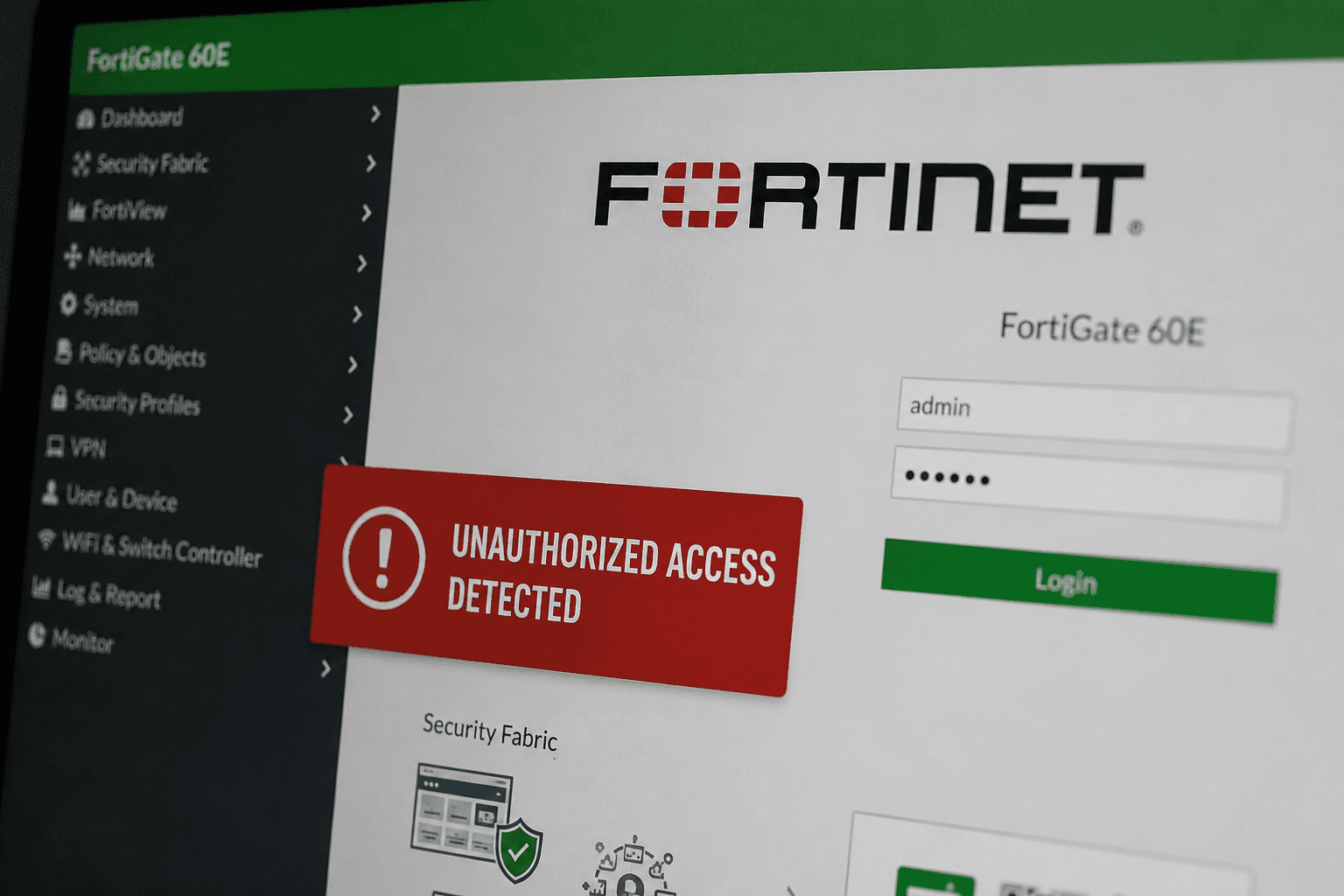
Security
14 views
FortiBleed Attack: Massive Compromise of Fortinet Firewalls
The cybersecurity incident known as “FortiBleed” involves a large-scale compromise campaign targeting Fortinet FortiGate firewalls and VPN gateways.
Estimates suggest between 30,000 and 75,000+ devices may have been affected globally.
The attack impacted organizations across government, telecom, healthcare, finance, and technology sectors in more than 190 countries.
What Happened?
- Credential stuffing using leaked passwords
- Password spraying attacks at scale
- Automated brute-force login attempts
- Exposure of Fortinet admin/VPN interfaces on the internet
- Use of previously leaked configuration data
Once access was gained, attackers extracted configuration files from devices.
Scale of the Attack
- 30,000+ confirmed compromised devices (minimum estimate)
- Up to 75,000–80,000 potentially affected firewalls
- Impact across critical infrastructure sectors
- Presence in 194 countries
- Tens of thousands of valid credentials collected
Attack Chain
- Internet scanning for exposed Fortinet portals
- Credential stuffing and brute-force attacks
- Login success on VPN/firewall interfaces
- Extraction of configuration files
- Reuse of credentials to expand access
Why It Matters
- VPN access to internal networks
- Lateral movement inside organizations
- Exposure of Active Directory integrations
- Data exfiltration
- Persistent access through trusted systems
No Zero-Day Confirmed
- No confirmed Fortinet zero-day
- No breach of Fortinet itself
- Main issue: exposed interfaces + weak credentials
Defense Measures
- Reset all credentials
- Enable MFA everywhere
- Restrict admin interfaces from internet
- Audit logs for suspicious logins
- Review configurations and backups
- Assume compromise if exposed publicly
ConnectMyAssets & Prevention
:contentReference[oaicite:0]{index=0} helps reduce this kind of risk by improving visibility over exposed assets.
- Continuous discovery of internet-facing assets
- Detection of forgotten or exposed services
- Identification of shadow IT
- Centralized asset inventory
- Faster detection of exposure changes
Key Takeaway
This incident shows that:
- Misconfiguration is more impactful than exploitation
- Visibility gaps create major security risks
- Credential hygiene remains critical