When Firewall Rules Drift Out of Control
Over time, most large firewall environments exhibit the same symptoms:
Rules added urgently and never revisited
Exceptions stacked on top of exceptions
Inconsistent naming and documentation
Fear of removing anything “just in case”
This is how disorder installs itself silently, until security and operations are both compromised.
Shadow Rules: The Invisible Risk
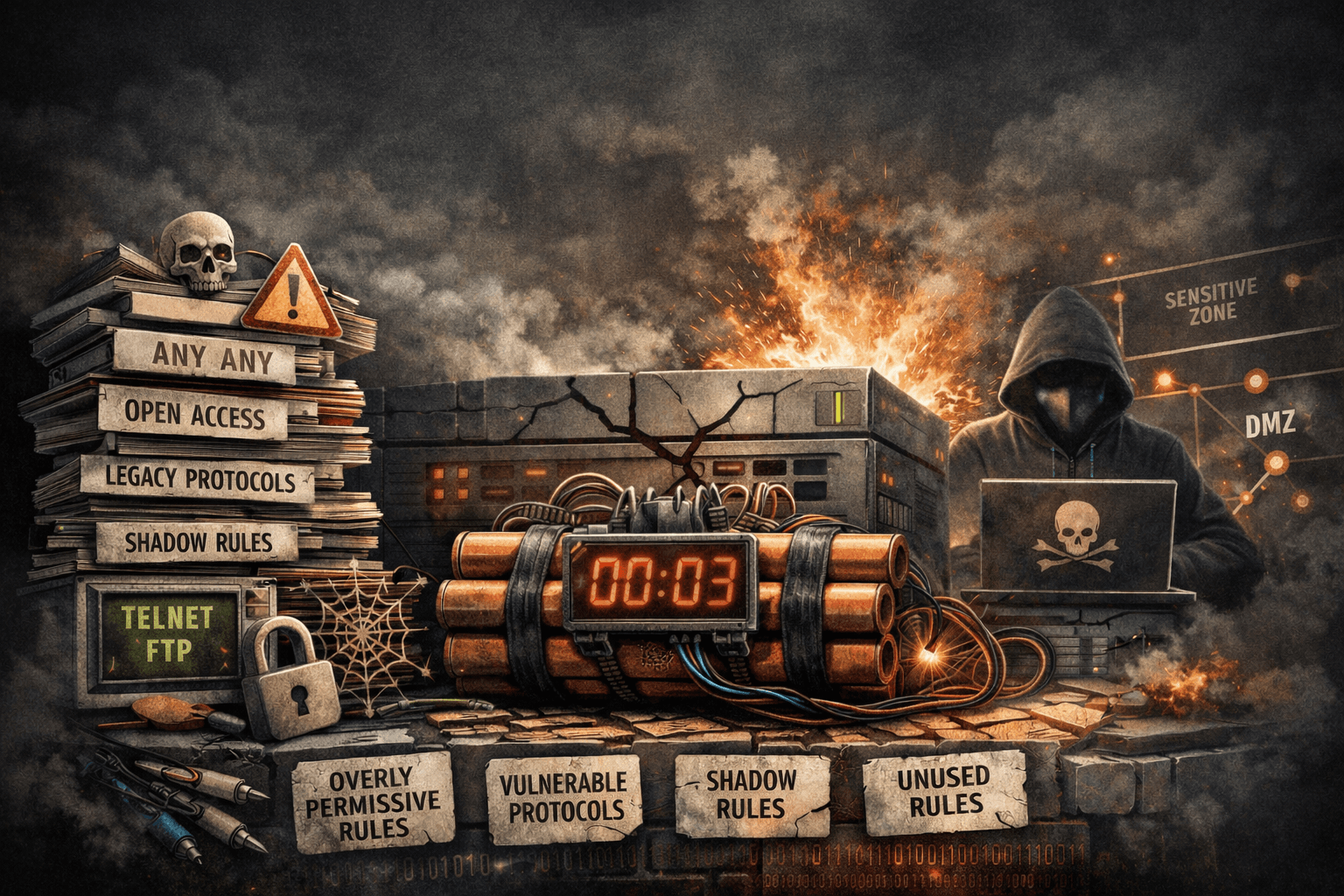
Shadow rules are rules that never actually apply because another rule above them already matches the traffic.
They are dangerous because:
They create a false sense of security
They hide configuration errors
They complicate audits and troubleshooting
They make rule bases harder to reason about
Shadow rules add complexity without providing protection — pure technical debt.
Overly Permissive Rules: Convenience Over Security
One of the most common long-term issues in firewall policies is overly permissive access:
anysource or destinationWide port ranges instead of specific services
Temporary rules that become permanent
These rules are often justified as “operationally necessary,” but in reality they dramatically increase the attack surface and weaken segmentation.
Convenience today becomes exposure tomorrow.
Vulnerable and Legacy Protocols Still Allowed
Another frequent finding in firewall audits is the continued use of outdated or vulnerable protocols, such as:
Telnet
FTP
SMBv1
Legacy SSL/TLS versions
These protocols may still work operationally, but they no longer meet modern security standards. Leaving them enabled — often forgotten in old rules — creates unnecessary risk and compliance gaps.
If a rule allows a vulnerable protocol, the firewall is enforcing yesterday’s security model.
Principles Are the Only Sustainable Defense
To avoid long-term chaos, firewall rules must be grounded in clear, enforced principles:
Least Privilege
Only allow what is strictly required — no more, no less.
Deny by Default
If traffic is not explicitly justified, documented, and approved, it should not pass.
Strong Segmentation
Rules should reinforce zone boundaries, not blur them.
Without these principles, rule bases inevitably drift toward insecurity.
Operational Discipline Keeps Policies Alive
Security principles alone are not enough. Firewall rules must also remain operationally manageable.
Documentation and Ownership
Every rule should clearly state:
Its purpose
The business application it supports
The owner responsible for reviewing it
Rules without owners never get cleaned up.
Regular Reviews
Periodic reviews help identify:
Unused rules
Shadowed rules
Overly permissive access
Legacy protocols still in use
Regular cleanup is not optional — it is maintenance.
Data Beats Assumptions
Modern firewall environments generate massive amounts of data. Rule usage statistics and traffic logs reveal the truth:
Rules that are never hit
Rules hit in unexpected ways
Services that are no longer needed
Using real data removes emotion and fear from rule cleanup decisions.
Where Tools Like ConnectMyAssets Make the Difference
This is where solutions like ConnectMyAssets provide real value.
By correlating firewall rules with actual assets, applications, and traffic, ConnectMyAssets helps teams:
Identify shadow and unused rules
Detect overly permissive access paths
Highlight vulnerable protocols still allowed
Understand why a rule exists — not just that it exists
Instead of managing firewall rules in isolation, security teams gain context and visibility, making cleanup decisions safer and faster.
Automation does not replace principles — it enforces them at scale.
Fewer Rules, Stronger Security
A clean firewall rule base is:
Easier to audit
Easier to troubleshoot
Easier to secure
Easier to trust
Reducing complexity is not about removing security — it is about restoring clarity.
Conclusion: Firewall Disorder Is a Choice
Firewall chaos does not appear overnight. It is the result of:
Ignored principles
Accumulated exceptions
Lack of ownership
Fear of change
Shadow rules, permissive access, and legacy protocols are not anomalies — they are symptoms.
With strong principles, operational discipline, and the right visibility tools, firewall rule bases can remain secure, understandable, and sustainable over time.
Without them, every large firewall eventually becomes a liability.