How SR-MPLS Supports MPLS/VPN Operations
SR-MPLS can serve as a drop-in replacement for the traditional MPLS control plane while supporting MPLS/VPN services when properly implemented. The scenario also highlights why configuration history, compliance checks, topology visibility, and controlled automation matter in day-to-day network operations.
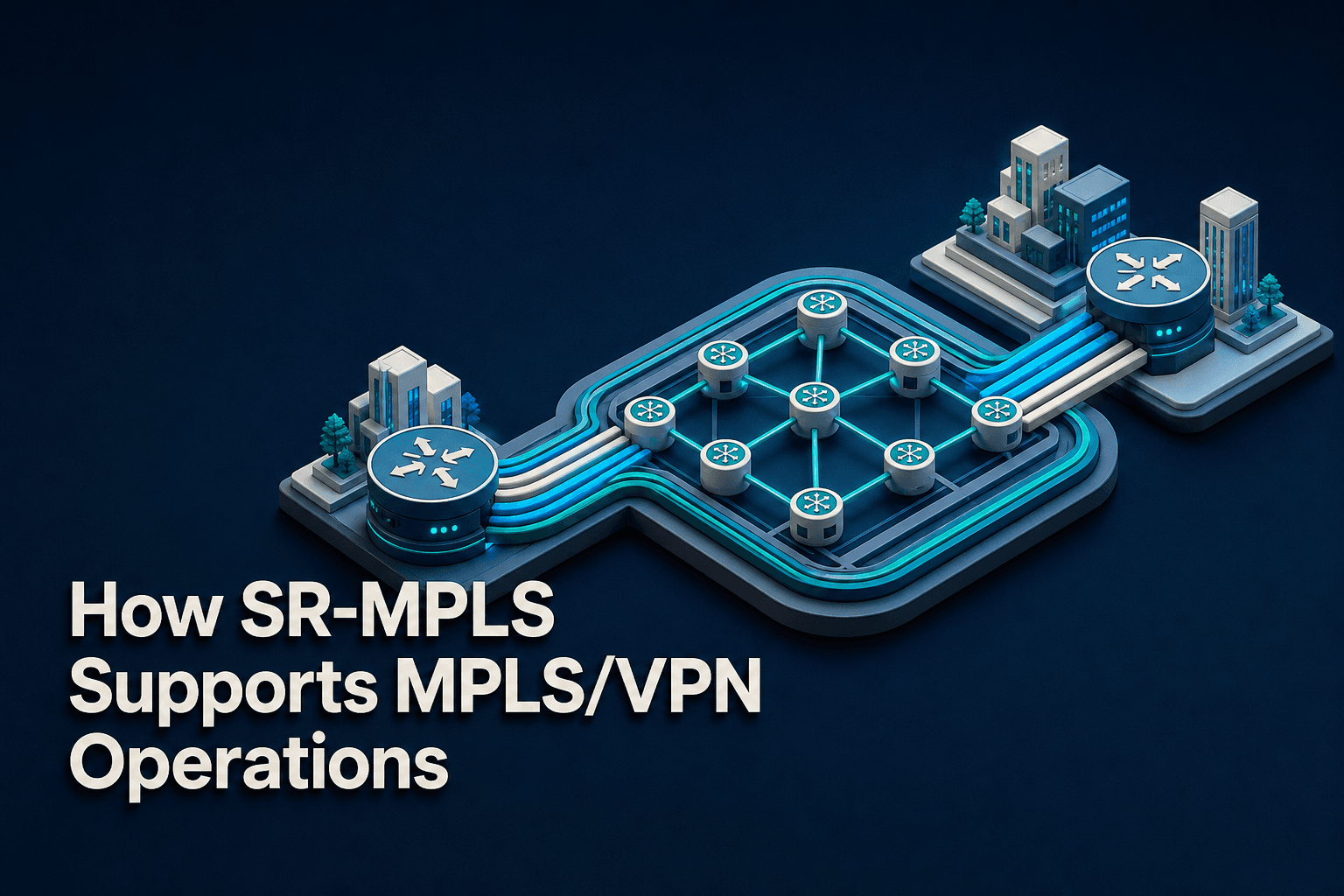
SR-MPLS can act as a drop-in replacement for the traditional MPLS control plane, making it a practical foundation for MPLS/VPN services when properly implemented. An ipSpace.net workshop scenario demonstrates the concept using a deliberately simple MPLS/VPN topology. For network teams, the design also raises practical questions about configuration consistency, compliance, and automation.
The SR-MPLS Core Scenario
The scenario builds on the same topology used for the earlier BGP-Free Core example. Instead of introducing an elaborate service-provider design, it focuses on the simplest possible MPLS/VPN network with an SR-MPLS core.
This makes the central point easier to examine: SR-MPLS replaces the traditional MPLS control-plane approach while continuing to support MPLS/VPN services. The qualification that it must be properly implemented remains operationally important.
Practical Configuration Considerations
A control-plane change affects more than architecture diagrams. Network teams need to understand the intended configuration state across the participating devices and retain evidence of each change.
Useful operational practices include:
- Recording configurations before and after SR-MPLS changes
- Tracking differences across core and edge devices
- Maintaining a clear inventory of participating infrastructure
- Preserving known-good versions for rapid recovery
- Reviewing topology changes alongside configuration changes
These controls help teams distinguish an intentional design update from drift or an incomplete rollout.
Compliance and Automation Implications
SR-MPLS does not remove the need for configuration governance. Device access, change history, approved settings, and rollback procedures still need to follow the organization’s operational and compliance policies.
Automation can help apply repeated configuration changes consistently, particularly across larger environments. It should be paired with version history, validation, and auditability so that speed does not come at the expense of control.
How ConnectMyAssets Helps
ConnectMyAssets provides on-prem operational controls around the multi-vendor network devices running services such as MPLS/VPN and SR-MPLS. It does not replace protocol design; it helps teams manage the infrastructure and configuration lifecycle surrounding that design.
- Dynamic CMDB and Network Topology automatically discover managed assets and map LLDP relationships.
- Backup & History versions device configurations, verifies them with SHA256, and provides one-click rollback to a known configuration.
- Compliance Engine evaluates managed configurations against policies for NIS2, ISO 27001, PCI-DSS, CISA, NIST, and HIPAA, with weighted scoring.
- Automation & ZTP supports controlled mass deployment and zero-touch provisioning workflows.
- Credential Vault centralizes the credentials used to access and manage network infrastructure.
Because ConnectMyAssets runs as a hardened on-prem OVA, configuration data, inventory records, and operational history remain within the organization’s environment.
Source: ipSpace.net