Allegations Become an Infrastructure Risk Signal
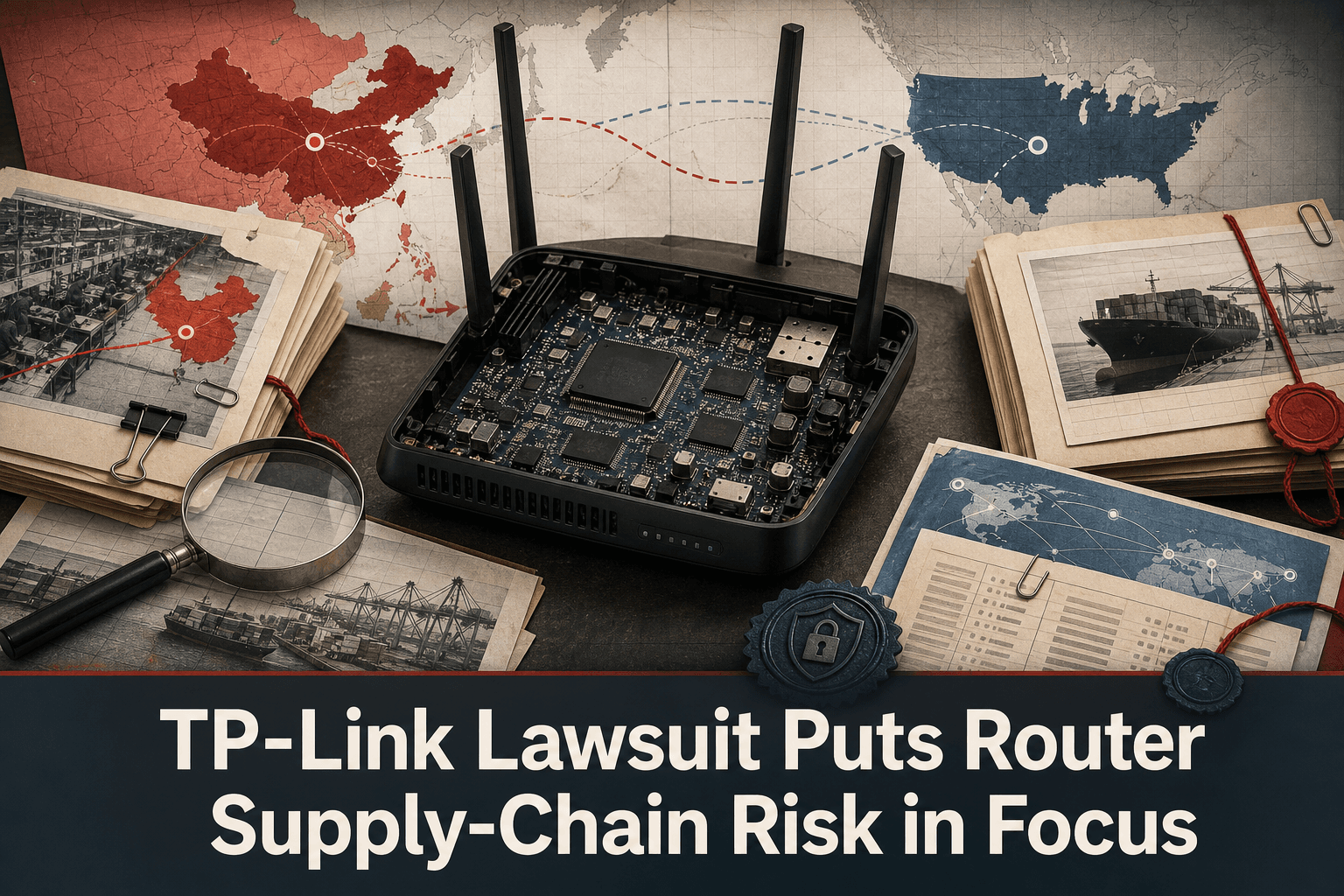
The Register reports that US states have sued router maker TP-Link over allegations concerning how it represented buyer protection and its reliance on Chinese suppliers. TP-Link rejects the allegations.
The claims should therefore be treated as disputed, not as established findings. Nevertheless, the case raises a practical question for network teams: how quickly could the organization measure and respond to a change in confidence around a router vendor?
That question is broader than the origin of a brand. Router risk can involve supplier dependencies, firmware provenance, vulnerability exposure, configuration integrity, support status, and the operational difficulty of replacing deployed equipment.
Assess More Than Vendor Nationality
A defensible review should use evidence rather than assumptions based solely on geography. The assessment can cover:
Supplier and procurement evidence. Retain vendor declarations, purchasing records, approval decisions, and any available information about manufacturing or component dependencies.
Firmware provenance. Record where each approved firmware image came from, how its integrity or signature was checked, and which devices received it.
Vendor concentration. Identify how many routers depend on one manufacturer, which network functions they support, and where replacement would be most disruptive.
Security exposure. Review known vulnerabilities per asset and determine whether mitigations, updates, or compensating controls are available.
Configuration integrity. Compare current configurations with approved baselines and investigate unexpected changes.
Lifecycle status. Track support and end-of-life information so geopolitical concerns do not obscure an already pressing maintenance problem.
Turn the Inventory Into a Response Plan
An inventory is useful only if it supports decisions. Network and security teams should define what happens when legal, regulatory, supplier, or technical information changes.
Establish criteria for additional monitoring, procurement suspension, isolation, accelerated replacement, or continued use with compensating controls.
Prioritize routers by role and business impact rather than replacing every device indiscriminately.
Preserve configuration backups before updates or replacement work.
Test alternative equipment and migration procedures before an urgent deadline appears.
Document who accepts residual supply-chain and geopolitical risk.
This approach separates a measured infrastructure response from a reaction to headlines. It also creates an audit trail showing why equipment was retained, restricted, updated, or replaced.
How ConnectMyAssets Helps
ConnectMyAssets provides an on-prem, vendor-agnostic foundation for managing the operational side of this assessment:
Dynamic CMDB identifies multi-vendor assets and helps expose concentration around a manufacturer or equipment family.
Backup & History preserves configuration versions and supports one-click rollback when an approved change causes problems.
Per-asset CVE Tracking connects vulnerability information to the equipment actually deployed.
End-of-Life Tracking adds support and lifecycle status to replacement decisions.
Compliance Engine helps structure controls and evidence for frameworks including NIS2, ISO 27001, PCI, CISA, and NIST.
Automation & ZTP can standardize approved configuration or migration actions across affected equipment.
ConnectMyAssets does not determine whether disputed legal allegations are true, nor does it replace supplier due diligence or cryptographic firmware validation. It helps teams maintain the asset, configuration, vulnerability, compliance, and lifecycle records needed to make a controlled decision when vendor risk changes.
Source: The Register