Active Exploitation Raises the Priority
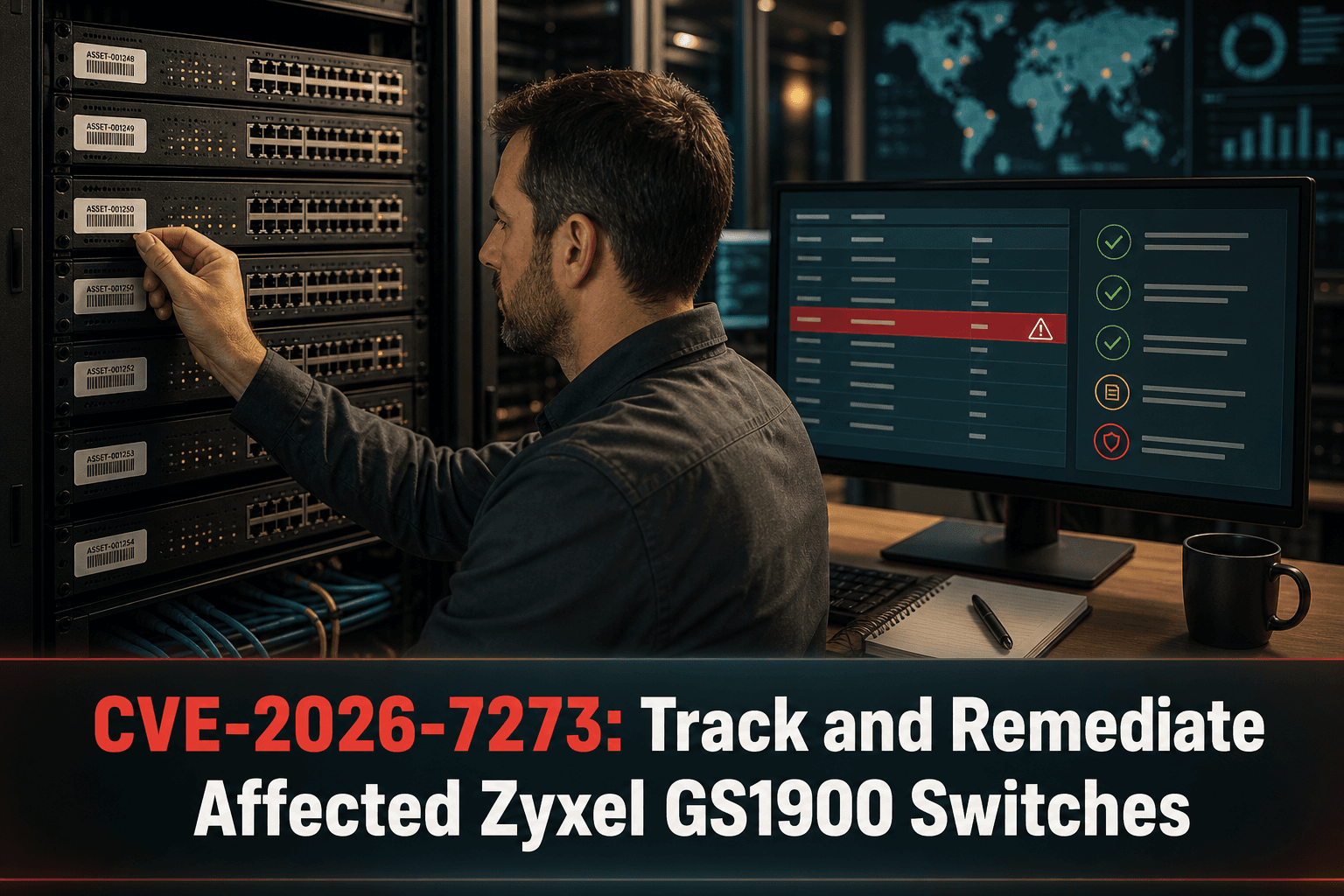
The U.S. Cybersecurity and Infrastructure Security Agency has added CVE-2026-7273 to its Known Exploited Vulnerabilities (KEV) catalog after finding evidence of active exploitation.
The now-patched vulnerability affects Zyxel GS1900 series switches. It is described as a stack-based buffer overflow and carries a CVSS score of 8.8.
A KEV addition should move the issue beyond routine vulnerability review. Organizations operating GS1900 switches need to determine which assets may be affected, validate their firmware against Zyxel's guidance, and document remediation. The source does not specify affected firmware versions, so teams should not infer exposure from the product family alone.
A Practical Remediation Workflow
1. Find Every Relevant Switch
Start with an inventory query for all Zyxel GS1900 series assets. Include production, branch, laboratory, spare, and temporarily deployed equipment. Older switches outside the normal monitoring scope can otherwise be missed.
For each asset, verify:
Exact model and serial number
Installed firmware version
Physical or logical location
Operational owner
Management address and reachability
Business role and service dependencies
2. Validate Firmware Exposure
Compare the recorded firmware version with the affected and fixed releases identified in official Zyxel guidance. Because the available source summary does not provide version ranges, avoid assigning vulnerability status solely from the model name.
Assets with missing, stale, or unverified firmware data should remain in the investigation queue until their status is confirmed.
3. Prioritize by Risk and Reachability
CISA's active-exploitation finding justifies expedited treatment. Within the affected population, teams can further prioritize switches based on management-plane exposure, network criticality, location, and the consequences of downtime.
This prioritization should supplement—not replace—the vendor's remediation instructions.
4. Preserve the Configuration Before Change
Capture a current configuration backup before applying firmware or making related changes. Record the timestamp, device identity, current firmware, intended target release, change owner, and approval reference.
After remediation, compare the configuration and verify essential switching and management functions. A configuration backup can support recovery from unintended configuration changes, but it should not be treated as a substitute for an approved firmware recovery procedure.
5. Close With Evidence
A complete remediation record should show:
Which assets were assessed
How firmware exposure was determined
Which corrective action was completed
When validation occurred
Who approved and performed the change
Which exceptions remain and when they will be reviewed
This creates an auditable response to a KEV-driven issue instead of leaving patch status scattered across tickets, spreadsheets, and administrator notes.
How ConnectMyAssets Helps
ConnectMyAssets provides an on-premises workflow for managing this response across multi-vendor infrastructure:
Dynamic CMDB: Find Zyxel GS1900 assets and associate each switch with its model, firmware, location, owner, and dependencies.
Per-asset CVE Tracking: Attach CVE-2026-7273 to relevant assets, track investigation status, and distinguish confirmed exposure from devices still awaiting verification.
Backup & History: Capture configurations before remediation, retain version history, compare changes, and use one-click configuration rollback when appropriate.
Compliance Engine: Preserve remediation evidence, approvals, validation results, and exceptions for programs aligned with NIS2, ISO 27001, PCI, CISA, or NIST requirements.
Automation: Run approved collection or remediation workflows consistently across selected assets while retaining execution records.
End-of-Life Tracking: Identify older hardware that may require replacement planning rather than repeated short-term remediation.
The immediate objective is to patch confirmed exposure. The broader objective is to maintain an inventory accurate enough that the next actively exploited network vulnerability can be scoped without delay.
Source: The Hacker News